Squeeze the Truth: What Vitamin C From Citrus Actually Does to Your Body (And What It Doesn't)
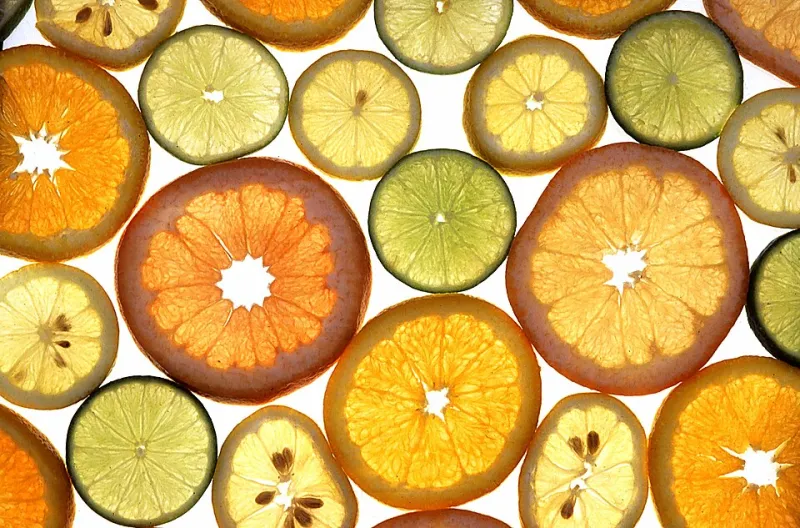
Photo: Scott Bauer, USDA, Public domain, via Wikimedia Commons
Every cold and flu season, the same ritual plays out in kitchens across America: someone sneezes, someone else makes a beeline for the fruit bowl, and suddenly the household orange supply is gone. Vitamin C from citrus has occupied a near-mythological place in American wellness culture since Linus Pauling started evangelizing megadoses back in the 1970s. But here's the thing about mythology — it tends to distort both the good and the bad. So let's actually look at what the science says, what it doesn't say, and why your morning grapefruit is still very much worth eating.
Vitamin C 101: What It's Actually Doing in There
First, the basics — because they matter. Vitamin C (ascorbic acid) is an essential water-soluble vitamin, which means your body can't produce or store it in significant quantities. You need a steady daily supply, and citrus is one of the most efficient and enjoyable ways to get it.
What it genuinely does: it's a powerful antioxidant that protects cells from oxidative damage, it's critical for collagen synthesis (which keeps your skin, joints, and blood vessels functional), it enhances the absorption of non-heme iron from plant foods, and yes — it does support immune function, specifically by stimulating the production and activity of white blood cells.
A medium navel orange delivers about 70mg of vitamin C, which comfortably covers the RDA of 65–90mg for most adults. A cup of fresh-squeezed grapefruit juice? Around 94mg. A tablespoon of fresh lemon juice? Roughly 7mg — modest, but it adds up across a day of cooking.
So far, so good. But here's where the mythology starts to creep in.
Myth #1: Vitamin C Prevents Colds
This one has been studied to death, and the verdict is... complicated. A landmark Cochrane Review — one of the most comprehensive analyses in nutritional research — examined decades of clinical trials and found that regular vitamin C supplementation does not significantly reduce the incidence of colds in the general population. You're not less likely to catch a cold because you eat oranges every day.
However — and this is the nuance that tends to get lost — the same review found that regular vitamin C intake does modestly reduce the duration and severity of colds once you have them. We're talking roughly 8% shorter duration in adults. Not dramatic, but not nothing either.
For people under intense physical stress — marathon runners, soldiers in extreme conditions — the evidence for prevention is actually stronger. So if you're training for a race in January, that daily citrus habit has more backing than it does for the average desk worker.
Myth #2: More Is Better
Here's where the supplement industry has done us a genuine disservice. The idea that if 90mg is good, 1,000mg must be ten times better is not how human biology works. Vitamin C is water-soluble, so excess is excreted in urine — your body has a saturation threshold called "bowel tolerance," and exceeding it doesn't boost immunity further; it just gives you gastrointestinal distress and expensive urine.
The Tolerable Upper Intake Level set by the National Institutes of Health is 2,000mg per day for adults. Regular megadosing above that threshold has been associated with kidney stone formation in susceptible individuals and can interfere with certain medical tests. The supplement aisle wants you to believe otherwise, but the evidence doesn't support the "more is more" philosophy here.
Fresh citrus, eaten as food, essentially self-regulates. You're not going to eat fifteen oranges in a sitting. The fruit delivers vitamin C in a dose your body can actually use.
The Part Nobody Talks About: Bioflavonoids
Here's where fresh citrus genuinely earns its reputation over supplements, and it's a story that doesn't get nearly enough airtime. Citrus fruits contain a family of plant compounds called bioflavonoids — hesperidin, naringenin, quercetin, and rutin, among others — that exist in the peel, pith, and juice membranes. These compounds don't just tag along for the ride; they actively enhance the bioavailability of vitamin C and carry their own significant anti-inflammatory and antioxidant properties.
Hesperidin, found abundantly in oranges and lemons, has shown promising activity in reducing markers of systemic inflammation in multiple clinical studies. Naringenin, concentrated in grapefruit, has been studied for its effects on metabolic health and cardiovascular function. These aren't fringe compounds — they're increasingly central to how researchers understand the health value of whole citrus consumption.
And here's the critical point: isolated ascorbic acid supplements contain none of these compounds. When you take a vitamin C pill, you're getting one molecule in isolation. When you eat an orange, you're getting a whole orchestra of compounds that work synergistically in ways we're still mapping.
Fresh vs. Processed: Does It Actually Matter?
Short answer: yes, but perhaps less than you think for vitamin C specifically, and more than you think for everything else.
Vitamin C is sensitive to heat, light, and oxygen. Pasteurized orange juice loses a meaningful percentage of its vitamin C during processing and continues to degrade during storage — by the time that carton has been sitting in your fridge for a week, the vitamin C content is notably lower than the label suggests. Freshly squeezed juice consumed immediately retains the most.
But the bigger loss in processed juice is the fiber and bioflavonoids that are either removed or degraded. Whole fruit wins here — the act of chewing the segments, consuming the membranes, and getting the natural fiber matrix all contribute to a slower sugar release and better overall nutritional delivery.
If fresh-squeezed isn't always realistic for you (and honestly, same), look for 100% orange juice with pulp, stored in glass rather than cardboard when possible, and consumed within a few days of opening.
So What Should Health-Conscious Citrus Lovers Actually Do?
Here's our practical take, with no supplement sponsorships clouding the picture:
- Eat whole citrus daily — the combination of vitamin C, bioflavonoids, fiber, and water content makes it one of the most complete immune-supportive foods you can choose.
- Don't ditch the pith and membranes — that white spongy stuff you instinctively avoid is loaded with hesperidin. Eat the segments whole.
- Be skeptical of megadose supplements — unless your doctor has identified a specific deficiency, you're likely not getting meaningful additional benefit from 1,000mg+ doses.
- Use citrus as a system, not a cure — vitamin C is one piece of immune health, alongside sleep, stress management, diverse produce intake, and movement. No single food is a silver bullet.
- Pair citrus with iron-rich plant foods — squeeze lemon over your lentils or spinach salad. The absorption enhancement is real and well-documented.
Your grandmother's instinct to reach for oranges when someone got sick wasn't wrong — it just wasn't the whole story. Fresh citrus is genuinely one of the most nutritionally generous foods in the American diet. It just works best when you understand what it's actually doing, rather than what the mythology says it's doing.